High-quality peptides for research and pharmaceutical applications
Hot selling products

Semaglutide
Semaglutide is a synthetic human glucagon-like peptide-1 (GLP-1) analog that functions as a GLP-1 receptor agonist. Its molecular structure is modified to prolong its half-life, achieving sustained receptor activation. In metabolic studies, semaglutide is widely used to investigate the regulatory mechanisms of glucose homeostasis, insulin sensitivity, and energy balance by enhancing glucose-dependent insulin secretion, inhibiting glucagon release, delaying gastric emptying, and regulating appetite signals in the central nervous system.
-
Mechanisms of type 2 diabetes
-
Metabolic syndrome
-
Appetite regulation
-
Weight management research

Tirzepatide
Tirzepatide is a first-in-class dual-receptor agonist that simultaneously activates the glucose-dependent insulinotropic peptide receptor (GIPR) and the glucagon-like peptide-1 receptor (GLP-1R). This dual-agonist effect synergistically regulates energy balance and glucose metabolism—GIPR activation enhances insulin secretion and improves adipose tissue function, while GLP-1R activation further inhibits glucagon release, delays gastric emptying, and promotes satiety. In research, tirzepatide is frequently used to explore the combined effects of dual-receptor activation on glucose and lipid metabolism, fat distribution, and central appetite regulation.
-
Glucose metabolism
-
Insulin secretion regulation
-
Obesity research
-
Mechanisms of metabolic diseases
_edited.png)
BPC-157
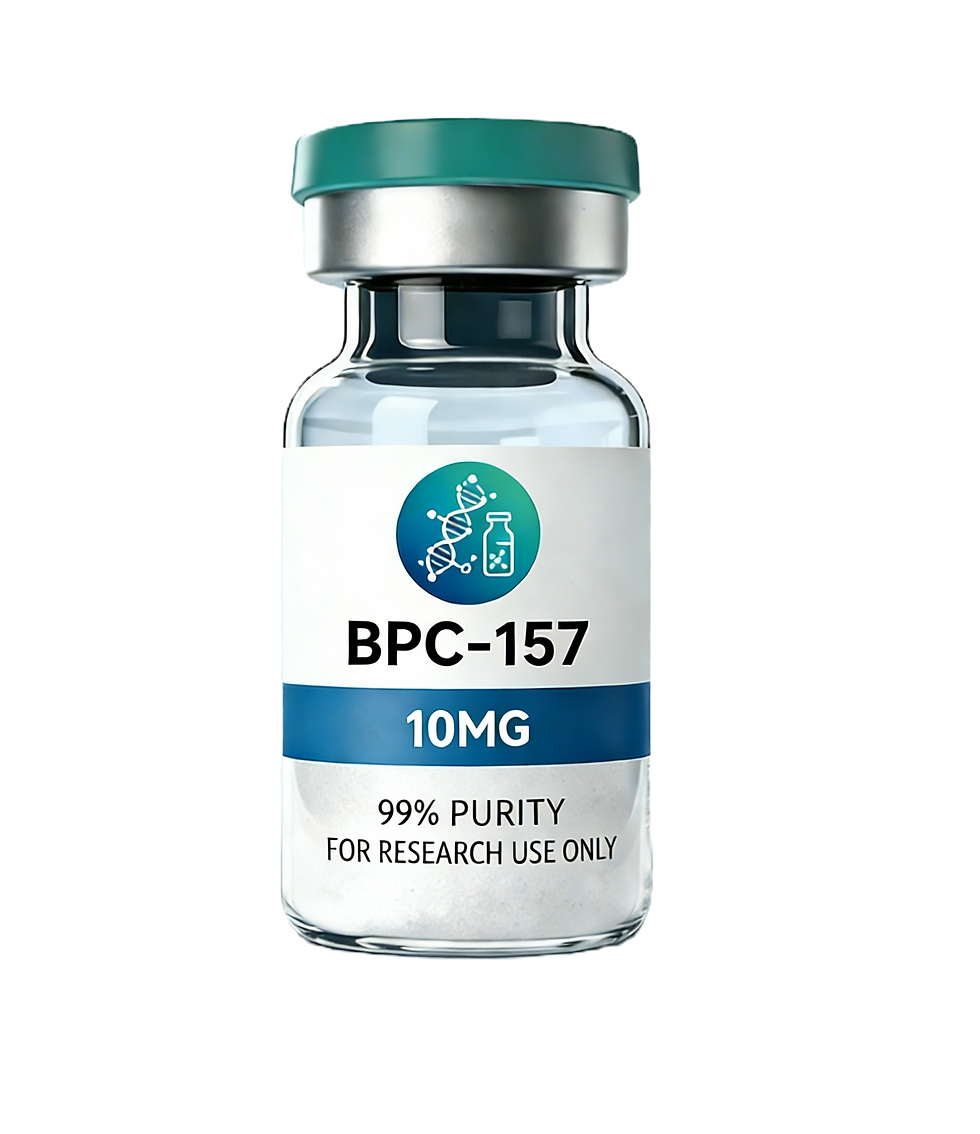
BPC-157 is a gastric-derived pentapeptide composed of 15 amino acids. Studies have confirmed that BPC-157 promotes endothelial cell proliferation, migration, and angiogenesis by activating the ERK1/2 signaling pathway, while also supporting collagen synthesis, fibroblast activity, and nitric oxide pathway regulation. Its pleiotropic effects have attracted widespread attention in research on the repair of muscle, tendons, ligaments, bone, and gastrointestinal tissues. BPC-157 also exhibits cytoprotective properties, enhancing tissue tolerance to injury by regulating cellular stress responses.
-
Tissue regeneration
-
Tendon/ligament healing
-
Angiogenesis
-
Gastrointestinal injury repair
-
Cellular protection

TB-500 (Thymosin Beta-4 Acetate)
TB-500 is a synthetic heptapeptide corresponding to the active amino acid region (Sequence Ac-LKKTETQ) of the natural protein thymosin β4 (Tβ4). Tβ4 is a major actin chelating protein in the cytoplasm. TB-500 plays a role in tissue repair research by promoting actin polymerization and regulating cell migration. Studies have shown that TB-500 can promote endothelial cell differentiation, dermal angiogenesis, keratinocyte migration, and collagen deposition, while also possessing certain anti-inflammatory activity.
-
Wound healing
-
Muscle/tendon repair
-
Cell migration mechanisms
-
Angiogenesis research
-
Anti-fibrosis
GHK-Cu
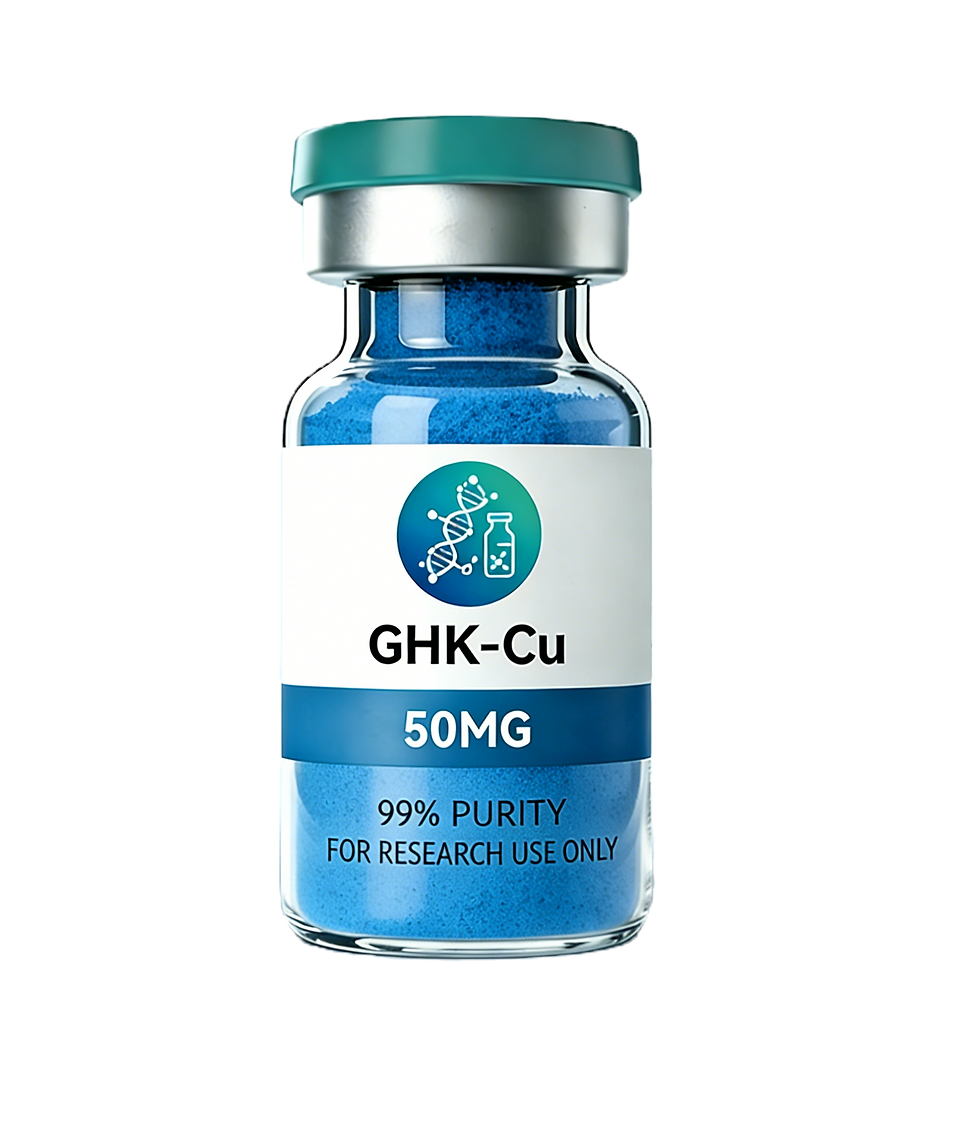
GHK-Cu (glycyl-L-histyl-L-lysine-copper complex) is a naturally occurring copper tripeptide found in human plasma. Its mechanism of action revolves around copper ions—GHK chelates copper ions to promote the expression and release of various trophic factors, angiogenic factors, and osteogenic factors, including brain-derived neurotrophic factor (BDNF), vascular endothelial growth factor (VEGF), and bone morphogenetic protein-2 (BMP-2). Studies have shown that GHK-Cu can promote fibroblast proliferation, collagen synthesis, angiogenesis, and extracellular matrix remodeling. Furthermore, GHK can regulate the expression activity of thousands of human genes.
-
Skin aging research
-
Collagen synthesis
-
Wound healing
-
Angiogenesis
-
Tissue remodeling
_edited.png)
Epitalon
Epitalon (also known as Epithalon, sequence Ala-Glu-Asp-Gly, AEDG) is a tetrapeptide synthesized from bovine pineal gland extract. Studies have shown that Epitalon can upregulate telomerase reverse transcriptase (hTERT) mRNA expression, induce telomerase activity, thereby promoting telomere elongation in in vitro cells, enabling cells to exceed the Hayflick limit and prolonging their replication lifespan. Furthermore, Epitalon also participates in the regulation of pineal gland function, influencing melatonin synthesis and circadian rhythm hormone patterns, exhibiting antioxidant and neuroprotective properties.
-
Mechanisms of cellular senescence
-
Telomere biology
-
Neuroendocrine regulation
-
Antioxidant research
-
Circadian rhythm

CJC-1295
CJC-1295 is a synthetic GHRH analog composed of 30 amino acids. It stimulates the pulsatile release of growth hormone by binding to and activating GHRH receptors on pituitary growth hormone cells. CJC-1295 is unique in that it contains a reactive group that covalently binds to free thiol groups on the surface of plasma proteins, thereby significantly prolonging its circulating half-life and duration of action. CJC-1295 is available in two forms: with DAC (containing a drug affinity complex, long-acting) and without DAC (without DAC, short-acting). The former binds to albumin for sustained release, while the latter is used to study GH secretion that more closely approximates the physiological pulsatile pattern.
-
Mechanisms of growth hormone secretion
-
Pituitary function research
-
Metabolic regulation
-
Body composition research
_edited.png)
Ipamorelin
Ipamorelin is a selective growth hormone secretagogue that acts as an agonist of the ghrelin/growth hormone secretagogue receptor (GHSR). Its unique characteristic lies in its high selectivity—unlike other compounds in its class, Ipamorelin stimulates GH release without significantly affecting cortisol or prolactin levels, making it a pure tool molecule for GH axis research. In studies, Ipamorelin is often used in combination with CJC-1295 to synergistically stimulate GH secretion through complementary pathways (GHRH pathway and ghrelin pathway).
-
Growth hormone secretion mechanism
-
GHSR signaling pathway
-
GH pulse rhythm study
-
Pituitary function
_edited.png)
AOD9604
AOD9604 is a synthetic lipolytic peptide derived from the C-terminal fragment of human growth hormone (GH 176–191), composed of 15 amino acids. Unlike intact hGH, AOD9604 does not bind to hGH receptors, nor does it increase IGF-1 or affect glucose levels. Instead, it acts directly on the lipid metabolism pathway by activating β-3 adrenergic receptors in adipocytes. Studies have shown that AOD9604 can promote lipolysis (lipolysis) and inhibit lipogenesis (lipogenesis), exhibiting effects of increasing lipid oxidation and reducing body fat accumulation in animal models.
-
Lipid metabolism mechanisms
-
Lipolysis signaling pathways
-
Obese animal models
-
Metabolic regulation

Tesamorelin
Tesamorelin is a stabilized synthetic GHRH analog that acts as a specific GHRH receptor agonist. It mimics the pharmacological properties of endogenous GHRH, stimulating anterior pituitary growth hormone cells to synthesize and release growth hormone in a physiologically pulsatile manner, subsequently increasing serum insulin-like growth factor-1 (IGF-1) and IGFBP-3 levels. Studies have shown that the GH release effect of Tesamorelin is highly specific and does not significantly affect the levels of other pituitary hormones such as TSH, LH, ACTH, and prolactin.
-
GHRH receptor signaling
-
GH/IGF-1 axis research
-
Adipose tissue distribution mechanisms
-
Metabolic endocrine system

Glutathione
Glutathione (γ-L-glutamyl-L-cysteyl-glycine, GSH) is a tripeptide composed of glutamic acid, cysteine, and glycine, and is one of the most important non-enzymatic antioxidants in living organisms. Its core mechanism involves the direct scavenging of reactive oxygen species and free radicals by its active sulfhydryl group (-SH), while also participating in maintaining redox balance and detoxification as a cofactor for glutathione peroxidase and glutathione S-transferase. In scientific research, glutathione is widely used in oxidative stress research, protein purification and refolding, cell culture additives, and iron metabolism-related studies.
-
Oxidative stress mechanisms
-
Antioxidative defense
-
Cell protection
-
Protein refolding
-
Cell culture